
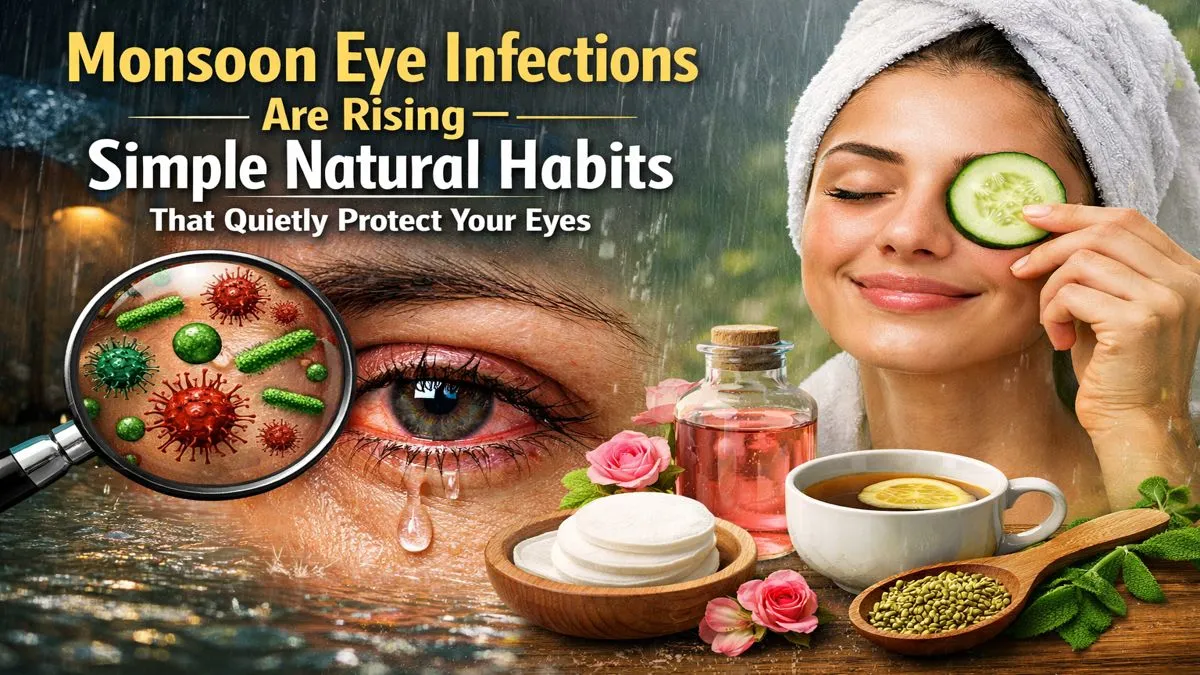
There’s a familiar scene every rainy season. Windows open. Damp breeze inside. Streets shining after a sudden downpour. Then someone in the house starts rubbing their eye.
It begins as irritation. A little redness. Maybe watering.

Two days later, half the family is searching for eye drops.
Monsoon isn’t just a season of chai and cool air. It quietly becomes prime time for eye infections. Humidity rises. Microbes thrive. Hands touch wet surfaces all day long. Eyes—already sensitive—take the hit first.
The good news? Prevention doesn’t start in a pharmacy. It starts in daily habits you probably overlook.

Let’s walk through what actually works.
Why Eye Infections Increase During Monsoon
Rain doesn’t directly infect your eyes. Moisture does something subtler.
It creates a perfect playground for bacteria, viruses, and fungi.
During monsoon:
- Air carries more microbes
- Towels stay damp longer
- Contact lenses trap moisture
- Hands stay less clean than we think
- Drinking water contamination rises in some areas
Your eyes respond fast. Redness. Itching. Sticky discharge. Light sensitivity.
Most infections spread through touch, not air. That’s the surprising part many people miss.
Rub your eye once after touching a contaminated surface, and the infection gets an invitation.
Common Monsoon Eye Infections You Should Recognize Early
Spotting symptoms early often prevents a full-blown infection.
1. Conjunctivitis (“Pink Eye”)
The classic rainy-season visitor.
Signs include:
- redness
- watery discharge
- sticky eyelids after sleep
- burning sensation
It spreads fast inside households.
2. Stye (Painful Eyelid Bump)
Looks small. Hurts big.
Usually caused by blocked oil glands worsened by humidity and bacteria.
3. Fungal Eye Irritation
Less common but increasing in damp environments.
Symptoms:
- persistent redness
- irritation that doesn’t improve
- blurred vision
This one needs faster attention than people expect.
Natural Prevention Works Best When Done Daily (Not After Symptoms Start)
Here’s the truth most people learn late.
Natural prevention isn’t dramatic. It’s consistent.
Tiny habits protect better than emergency treatments.
Let’s go step by step.
9 Natural Ways to Prevent Eye Infections During Monsoon
1. Wash Hands Before Touching Your Eyes (Even Once Matters)
It sounds obvious.
Almost nobody does it consistently.
Your phone screen carries more microbes than a public tap handle in many cases. Then fingers move straight to the eye corner.
One mindful pause changes everything.
Rule: If your fingers touched outside surfaces, don’t touch your eyes.
2. Keep Towels Personal During Rainy Season
Shared towels spread infection faster than door handles.
Moisture traps bacteria.
Use:
- separate face towels
- sun-dry whenever possible
- replace damp cloth immediately
Simple habit. Huge protection.
3. Splash Eyes With Clean Drinking Water Twice Daily
Not tap water in uncertain supply areas.
Use safe drinking water.
Morning and evening rinsing removes dust, allergens, and microbes before they settle.
Think of it as brushing teeth—but for your eyes.
4. Rose Water (Pure, Sterile Only) Helps Calm Irritation
Traditional households used it long before eye drops became common.
Benefits:
- reduces mild redness
- refreshes tired eyes
- supports natural tear balance
Important detail:
Only sterile, ophthalmic-grade rose water is safe.
Homemade versions are risky.
5. Triphala Eye Wash (Used Correctly) Supports Eye Hygiene
Ayurvedic practice often includes filtered Triphala solution rinses.
Possible benefits:
- reduces irritation
- supports tear film stability
- helps remove debris
Preparation quality matters more than the ingredient itself.
Never use unfiltered mixtures.
6. Eat Eye-Protective Seasonal Foods
Eyes fight infection better when nutrition supports immunity.
During monsoon, include:
- carrots
- spinach
- amla
- mango (moderate amount)
- pumpkin
Vitamin A and antioxidants strengthen the eye surface barrier naturally.
7. Reduce Contact Lens Wearing Time
Humidity traps microbes between lens and cornea.
Try switching to glasses more often during rainy weeks.
Your eyes breathe better.
And infection risk drops immediately.
8. Avoid Rubbing Eyes During Rain Exposure
Rainwater isn’t clean.
Even light drizzle carries pollutants in urban areas.
If rain touches your face:
wash gently at home first.
Then dry.
9. Sleep Matters More Than People Think
Poor sleep weakens tear production.
Dry eyes become vulnerable eyes.
Seven hours of sleep quietly strengthens your natural protection system.
Quick Prevention Comparison Table: What Helps Most vs What People Usually Do
| Habit | What People Usually Do | What Actually Works Better |
|---|---|---|
| Face washing | Random splashes anytime | Clean drinking water rinse twice daily |
| Towels | Shared among family | Personal dry towel only |
| Contact lenses | Wear same routine | Reduce use during humid weeks |
| Eye irritation | Rub immediately | Wash hands first |
| Nutrition | Ignore seasonal foods | Add Vitamin-A rich vegetables |
| Rain exposure | Let it dry naturally | Rinse face gently afterward |
Small adjustments create the biggest protection.
Early Warning Signs You Should Never Ignore
Catch infections early and recovery becomes faster.
Watch for:
- persistent redness
- sticky discharge after sleep
- itching that increases daily
- blurred vision
- eyelid swelling
If symptoms last more than 48 hours, natural care alone may not be enough.
Medical evaluation protects long-term vision.
Natural Remedies That Work — And Those That Don’t
There’s confusion here every monsoon season.
Let’s clear it up.
Helpful Natural Support
Safe when used correctly:
- sterile rose water
- clean cold compress
- filtered Triphala rinse
- hydration
- proper sleep
Avoid These Common Mistakes
Risky habits still circulate widely:
- raw tap water eye splashes
- homemade herbal mixtures
- saliva application (surprisingly common myth)
- using someone else’s eye drops
Eyes deserve cleaner solutions than guesswork.
Who Needs Extra Protection During Monsoon
Some people face higher risk naturally:
- contact lens users
- children in schools
- outdoor commuters
- diabetics
- elderly adults
If you fall in these groups, prevention habits matter twice as much.
When Natural Prevention Isn’t Enough
Nature supports healing.
It doesn’t replace medical care.
Seek professional help if:
- pain increases
- vision changes
- discharge turns yellow-green
- swelling spreads
- symptoms last beyond two days
Early treatment prevents complications.
Delay invites them.
Final Verdict: The Quiet Habit That Protects Eyes the Most
If someone asked me to choose just one prevention strategy after years of watching seasonal infection patterns, it wouldn’t be herbal washes or supplements.
It would be this:
Stop touching your eyes without washing your hands first.
That single habit blocks most infections before they begin.
Add clean water rinsing, personal towels, and seasonal nutrition—and suddenly monsoon stops feeling like infection season.
Your eyes stay calm.
Clear.
Comfortable.
Exactly the way they should feel when rain arrives.
FAQs
1. Can monsoon rainwater cause eye infections?
Yes. Rainwater often carries pollutants and microbes, especially in cities, which can irritate or infect eyes if not rinsed off properly.
2. Is rose water safe for daily eye use during monsoon?
Only sterile, ophthalmic-grade rose water is safe; homemade or cosmetic versions may worsen irritation instead of helping.
3. Should I stop wearing contact lenses in the rainy season?
You don’t have to stop completely, but reducing wear time lowers moisture buildup and infection risk significantly.
4. When should I see a doctor for a monsoon eye infection?
If redness, discharge, swelling, or blurred vision lasts more than 48 hours, medical evaluation is the safest step.