


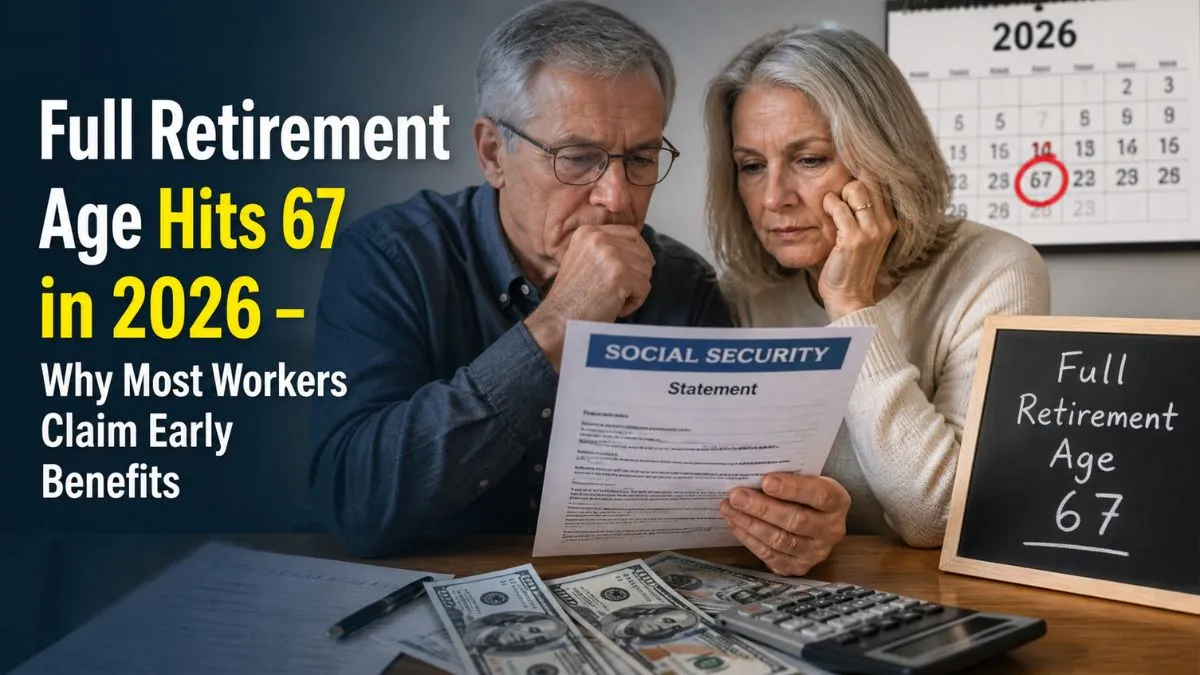
Retirement is something most people look forward to, but understanding when and how to claim benefits can feel confusing. In 2026, a major milestone is happening in the United States: the full retirement age officially reaches 67 for many workers. This change affects millions of people planning their future income. But here’s the surprising part—most workers are not waiting until 67 to claim their benefits.
Instead, they are choosing to take money earlier, even if it means receiving smaller monthly payments. Why is this happening? Is it a smart move or a risky decision? In this article, we break everything down in simple, easy-to-understand language so even a 15-year-old can follow along. You’ll learn what the new retirement age means, why people are claiming early, and how these choices can impact financial security later in life.
TA New Full Retirement Age Hits 67 in 2026 – How Most Workers Are Claiming Now


The full retirement age (FRA) in the United States has been gradually increasing for years. Starting in 2026, it officially reaches 67 for people born in 1960 or later. This means that to receive 100% of your Social Security benefits, you must wait until you turn 67. Before this change, many people could claim full benefits at 65 or 66.
This shift is part of a long-term plan to adjust the system as people live longer. On average, people today live many years longer than they did decades ago. Because of this, the government has slowly raised the retirement age to help keep the system financially stable.
However, just because the full retirement age is 67 doesn’t mean people have to wait that long. Workers can still start claiming benefits as early as age 62. But there’s a catch—if you claim early, your monthly payments are reduced.
Why Many Workers Are Claiming Early

Even though waiting until 67 gives the highest standard benefit, most Americans are choosing to claim earlier. This might seem surprising, but there are several reasons behind this trend.
One major reason is financial need. Many workers simply cannot afford to wait. Rising costs of living, medical expenses, and job uncertainty push people to take money as soon as they can. For someone who has lost a job in their early 60s, claiming benefits early may feel like the only option.
Health is another big factor. Some people worry they may not live long enough to enjoy their benefits if they wait too long. If someone has health problems, claiming early ensures they receive something while they can still use it.

Another reason is job burnout. After working for decades, many people feel physically or mentally exhausted. Continuing to work until 67 may not seem possible, especially in physically demanding jobs.
How Early Claiming Affects Monthly Income
Claiming Social Security early comes with a clear trade-off: you get money sooner, but you receive less each month. For example, if someone is eligible for $1,000 per month at age 67, claiming at 62 could reduce that amount to about $700. That’s a significant drop.
Over time, this difference can add up to thousands of dollars. On the other hand, delaying benefits past 67 can actually increase monthly payments. If someone waits until age 70, their benefit could grow by about 8% per year.
That means they could receive much more each month. So, the decision is not just about when to retire—it’s about how much money you want to receive over your lifetime.
A Simple Comparison Table
Here’s a quick look at how claiming age impacts monthly benefits:
| Claiming Age | Monthly Benefit (Example) | Change Compared to Full Age |
|---|---|---|
| 62 | $700 | -30% |
| 65 | $866 | -13% |
| 67 (Full Age) | $1,000 | 0% |
| 70 | $1,240 | +24% |
The Psychological Side of Retirement Decisions
Money isn’t the only factor influencing when people claim benefits. Emotions and mindset also play a big role. Some people prefer the security of having money in hand as soon as possible. They feel more comfortable knowing they have a steady income, even if it’s smaller.
Others may worry about changes to the system in the future and want to claim benefits while they can. There’s also a sense of control. Claiming early gives people the feeling that they are taking charge of their finances instead of waiting on government rules.
The Impact of Inflation and Living Costs
Inflation is another key reason people are claiming early. Prices for everyday items like food, housing, and healthcare have increased in recent years. For many retirees, waiting until 67 may not be realistic when bills need to be paid now.
Even though Social Security benefits are adjusted for inflation, the rising cost of living still puts pressure on retirees. This leads many to start benefits earlier to cover immediate expenses.
What Financial Experts Suggest
Financial experts often recommend waiting as long as possible to claim benefits, especially if you are healthy and have other sources of income. Waiting can provide higher monthly payments, which can be especially helpful later in life when medical expenses increase. However, there is no one-size-fits-all answer.
The best decision depends on personal circumstances, including health, savings, job situation, and family needs. For example, someone with strong savings might benefit from waiting, while someone with limited resources may need to claim early.
Planning Ahead for Retirement
The key to making a smart retirement decision is planning ahead. Understanding your expected expenses, savings, and income sources can help you choose the right claiming age.
It’s important to think about long-term needs, not just short-term comfort. While claiming early may solve immediate financial problems, it could lead to challenges later if monthly income is too low.
You should also consider factors like healthcare costs, lifestyle choices, and potential emergencies. Having a clear plan can make a big difference.
The Future of Retirement Trends
As the full retirement age reaches 67 in 2026, this trend of early claiming may continue. Younger generations may face similar decisions, especially as economic conditions change.
Technology, remote work, and new job opportunities may also influence how people approach retirement. Some may choose to work part-time instead of fully retiring, allowing them to delay benefits while still earning income.
Final Thoughts
The shift to a full retirement age of 67 marks an important moment for American workers. While the rule is clear, the choices people make are not. Many are choosing to claim benefits early due to financial pressure, health concerns, and personal preferences.
There is no perfect answer for everyone. The best decision depends on your situation, goals, and priorities. What matters most is understanding the trade-offs and planning carefully.
Retirement is not just about reaching a certain age—it’s about creating a secure and comfortable future.
FAQs
What is the full retirement age in 2026?
The full retirement age will be 67 for people born in 1960 or later.
Can I still claim benefits at 62?
Yes, but your monthly payments will be reduced if you claim early.
Why do people claim benefits early?
Common reasons include financial need, health concerns, and job loss.
Is it better to wait until 70?
Waiting can increase your monthly payments, but it depends on your situation.
How much do benefits reduce if claimed early?
Benefits can be reduced by up to 30% if claimed at age 62 instead of 67.