


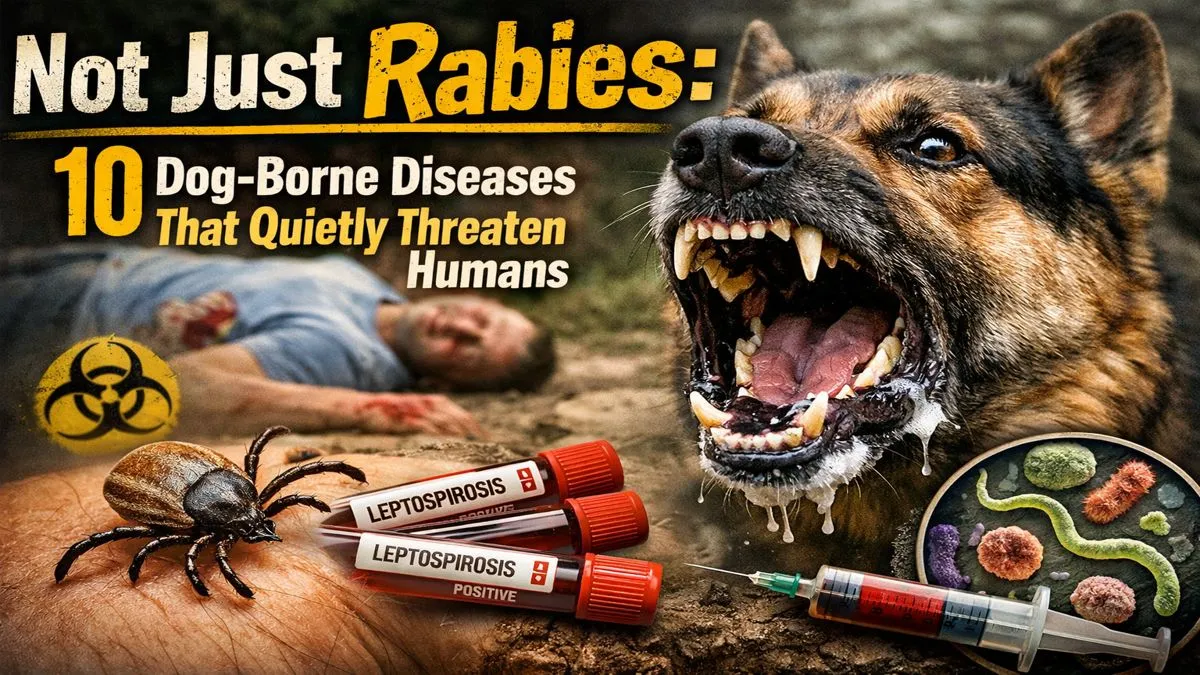
Most people hear “dog-borne disease” and think of only one word: rabies.
That’s understandable. Rabies is dramatic. It’s terrifying. It makes headlines.


But here’s what rarely gets talked about in clinics, neighborhoods, or even pet owner groups: dogs can transmit several infections that quietly affect skin, lungs, liver, intestines, and even the brain. Many don’t look serious at first. Some start like a harmless rash or mild fever. Others mimic seasonal illness.
As someone who has spent years interviewing veterinarians, epidemiologists, and public-health officers, I’ve noticed a pattern. Families usually learn about these diseases only after someone falls sick.
Let’s change that today.
Why Dog-Borne Diseases Still Matter in 2026
Urban living has brought humans and dogs closer than ever. Street dogs share sidewalks. Pets share sofas. Kids share everything—including microbes.
Public-health surveillance across Asia continues to show zoonotic infections linked to dogs remain underreported, especially parasitic ones. The issue isn’t panic. It’s awareness.
Knowing what to watch for changes outcomes.
Quick Comparison: 10 Dog-Borne Diseases at a Glance
| Disease | Type | Spread Method | Early Signs | Risk Level |
|---|---|---|---|---|
| Rabies | Viral | Bite/saliva | Fever, confusion | Fatal if untreated |
| Leptospirosis | Bacterial | Urine-contaminated water | Fever, muscle pain | Serious |
| Ringworm | Fungal | Skin contact | Circular rash | Mild–moderate |
| Toxocariasis | Parasitic | Soil contamination | Cough, fever | Moderate |
| Hydatid Disease | Parasitic | Dog feces exposure | Silent cyst growth | Serious |
| Campylobacteriosis | Bacterial | Contaminated feces | Diarrhea | Moderate |
| Salmonellosis | Bacterial | Contaminated surfaces | Vomiting | Moderate |
| MRSA | Bacterial | Close contact | Skin infections | Moderate |
| Scabies | Parasitic | Skin contact | Itching rash | Mild |
| Pasteurellosis | Bacterial | Bites/scratches | Swelling | Moderate |

Key takeaway: Rabies is the most dangerous—but not the most common dog-linked infection affecting humans.
1. Rabies Still the Most Dangerous
Rabies deserves its reputation.
Once symptoms appear, survival becomes extremely rare. The virus attacks the central nervous system, often beginning with something deceptively ordinary—fever, tingling near the bite, irritability.
Then behavior changes. Confusion sets in. Hydrophobia appears.
The tragedy? Rabies is almost entirely preventable with timely vaccination after exposure.
Many cases occur because people delay treatment after small bites or scratches they assume are harmless.
If a dog bite breaks skin—even slightly—medical evaluation isn’t optional.
2. Leptospirosis The Rainy-Season Infection Most People Miss
Leptospirosis spreads through water contaminated with infected dog urine.
During monsoon months, puddles become silent carriers. Children playing barefoot are especially vulnerable.
Symptoms often look like viral fever:
- headache
- muscle pain
- chills
- red eyes
Left untreated, it can damage kidneys or liver.
Veterinarians quietly confirm what public campaigns rarely highlight: unvaccinated dogs significantly increase household exposure risk.
3. Ringworm The Rash That Isn’t Actually a Worm
Despite its name, ringworm isn’t a worm at all. It’s a fungal infection.
It spreads through direct contact with infected dogs—or their bedding, brushes, or collars.
The classic sign?
A circular rash with raised edges that slowly expands outward.
Children catch it fastest. Their skin barrier is thinner, and they cuddle pets without hesitation.
The good news: treatment is straightforward when caught early.
4. Toxocariasis The Playground Parasite
Dogs infected with roundworms shed microscopic eggs into soil.
Kids playing in parks unknowingly touch contaminated ground, then touch their mouth.
Inside the body, larvae travel through organs.
Symptoms vary widely:
- coughing
- fever
- abdominal discomfort
- blurred vision in rare cases
Doctors often mistake mild infections for allergies.
Awareness prevents that confusion.
5. Hydatid disease The Silent Cyst Builder
This one surprises even experienced pet owners.
Hydatid disease develops when humans accidentally ingest parasite eggs from dog feces.
The parasite forms cysts inside organs—usually liver or lungs.
Here’s the unsettling part:
People may feel completely fine for years.
Then imaging scans reveal large cyst structures that require surgery.
Rural communities face higher risk, but urban exposure exists too.
6. Campylobacteriosis The Hidden Cause of Sudden Stomach Trouble
Dogs with diarrhea can transmit Campylobacter bacteria through contaminated surfaces.
Humans develop:
- diarrhea
- cramps
- fever
- fatigue
Children and older adults experience stronger symptoms.
Most recover quickly, yet dehydration can become serious if ignored.
Simple hygiene reduces risk dramatically.
7. Salmonellosis More Than a Food Poisoning Problem
People associate Salmonella with eggs or chicken.
Dogs carry it too.
Transmission happens when:
- cleaning pet waste
- touching contaminated toys
- handling raw pet food
Symptoms resemble classic food poisoning.
The surprising truth?
Healthy-looking dogs can still carry Salmonella without symptoms.
8. Methicillin-resistant Staphylococcus aureus When Bacteria Travel Both Ways
MRSA moves between humans and pets in both directions.
That makes households shared microbial ecosystems.
Minor skin infections appear first:
- redness
- swelling
- painful bumps
Hospitals treat MRSA seriously because antibiotic resistance complicates recovery.
Pet hygiene suddenly becomes part of family health strategy.
9. Scabies The Itch That Keeps Everyone Awake
Dog-associated scabies mites temporarily infect humans.
The itching feels relentless, especially at night.
Typical locations include:
- wrists
- waistline
- fingers
Unlike human scabies strains, dog mites usually don’t reproduce long-term on people—but they cause intense irritation before disappearing.
Prompt veterinary treatment fixes the root cause.
10. Pasteurellosis The Infection That Follows “Small” Bites
Pasteurella bacteria live naturally in dog mouths.
Even gentle nips can introduce infection under skin.
Within hours, people may notice:
- swelling
- redness
- warmth
- tenderness
Ignoring early treatment risks deeper tissue infection.
Doctors often prescribe antibiotics immediately after suspicious bites for this reason.
Who Faces the Highest Risk?
Certain groups need extra caution:
- children under 10
- elderly adults
- pregnant individuals
- immunocompromised patients
- veterinary workers
- stray-dog feeders
Risk rises with exposure—not fear.
Dogs themselves aren’t the problem. Lack of preventive awareness is.
Everyday Habits That Reduce Risk Dramatically
These steps sound simple. They work.
Wash hands after touching pets
Vaccinate dogs on schedule
Avoid contact with stray animal saliva
Deworm pets regularly
Clean pet bedding weekly
Seek treatment immediately after bites
Public-health specialists repeat this advice for a reason. It saves lives.
Final Verdict: My Personal Take After Years Covering Zoonotic Disease
People don’t get sick because they love dogs.
They get sick because nobody warned them what to watch for.
Dogs remain one of humanity’s closest companions. They protect homes, comfort children, and reduce loneliness in measurable ways backed by medical research. Still, companionship works best when paired with awareness.
If there’s one message worth remembering from this investigation, it’s this:
Rabies isn’t the only risk—and prevention starts long before symptoms appear.
Stay informed. Stay observant. Keep loving dogs—with smarter habits.
FAQs
1. Can healthy-looking dogs still spread diseases to humans?
Yes. Many infections like Salmonella, ringworm, and parasites can be carried by dogs without visible symptoms.
2. Is vaccination enough to prevent all dog-borne diseases?
No. Vaccines protect against major threats like rabies, but regular deworming and hygiene habits are equally important.
3. Are children more vulnerable to dog-transmitted infections?
Yes. Kids face higher risk because they play on the ground more and often touch pets before washing hands.
4. When should I see a doctor after a dog bite or scratch?
Immediately if skin breaks—even slightly—since early treatment prevents infections like rabies and pasteurellosis.