


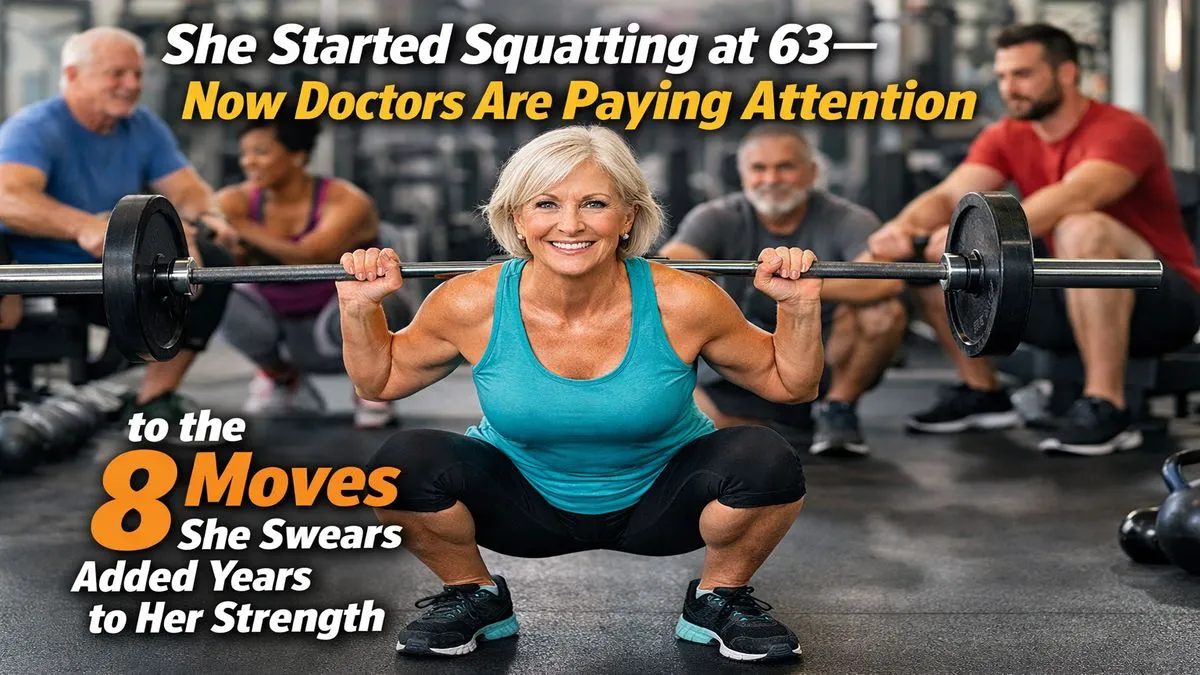
At 63, most people expect their knees to complain louder than their ambitions.
She expected the same.


Yet one winter morning, after struggling to stand up from a low sofa without using both hands, she made a quiet decision: she would train her legs again—even if it meant starting from scratch.
No gym membership. No personal trainer. No miracle supplement.
Just squats.

Six months later, she could carry groceries without resting halfway up the stairs. A year later, she was walking faster than women ten years younger in her neighborhood group. Today, she swears squats gave her something medicine couldn’t: confidence in her own body again.
Her story isn’t unusual. It’s just rarely told.
And doctors are starting to notice.
Why Squats Matter More After 60 Than Most People Realize

Strength loss doesn’t arrive politely.
It sneaks in through small inconveniences—difficulty rising from chairs, slower walking speed, hesitation on stairs. These aren’t minor annoyances. They are early signals of declining muscle power, a key predictor of long-term independence.
Research in geriatric exercise science consistently links lower-body strength with:
- Reduced fall risk
- Better bone density
- Improved insulin sensitivity
- Longer mobility lifespan
- Higher survival rates in older adults
Squats train the exact muscles responsible for staying independent.
That’s why physiotherapists sometimes call them “the sit-to-live movement.”
If you can squat comfortably, chances are you can keep living on your own terms longer.
The Turning Point That Changed Everything for Her
She didn’t start with perfect form.
Her knees clicked. Her hips felt stiff. The first week, she held onto a dining chair for balance and counted five repetitions as a victory.
Then something surprising happened.
Pain didn’t increase.
Confidence did.
Within weeks, she noticed she could stand without pushing off armrests. That small change reshaped how she moved through the day. Suddenly, the body she thought was “aging fast” felt trainable again.
And that’s when she added variation.
Because squats aren’t one exercise.
They’re a toolbox.
The 8 Squat Variations She Used to Rebuild Strength After 60
Each squat targets strength differently. Together, they create resilience.
1. Chair Squats (Foundation Builder)
She began here.
Sit down. Stand up. Repeat slowly.
It sounds simple because it is. Yet this movement retrains the exact pattern required for independence.
Best for: beginners and joint-sensitive knees
2. Wall Squats (Confidence Booster)
Back against a wall. Slide downward slightly. Hold.
This version builds endurance without fear of falling backward.
Best for: posture support and controlled strengthening
3. Supported Squats (Balance Trainer)
Holding a table edge allowed her to focus on depth instead of stability.
Balance improves faster when fear disappears.
Best for: early coordination improvement
4. Half Squats (Joint-Friendly Strength Builder)
She didn’t chase depth early.
Stopping halfway kept movement safe while muscles adapted.
Best for: knee-friendly progression
5. Box Squats (Controlled Movement Upgrade)
Using a slightly lower chair encouraged stronger hip engagement.
Suddenly stairs felt easier.
Best for: hip strength and safer mechanics
6. Heel-Elevated Squats (Mobility Helper)
A small book under the heels changed everything.
Ankles opened up. Knees tracked better.
Best for: limited ankle flexibility
7. Slow Tempo Squats (Muscle Activator)
Three seconds down. Pause. Rise slowly.
Muscles responded immediately.
Best for: strength without heavy weights
8. Bodyweight Free Squats (Confidence Milestone)
Eventually, she stopped holding support.
That moment mattered more than she expected.
Because independence feels physical before it feels emotional.
Best for: full functional strength
Comparison Table: What Each Squat Variation Improves Most
| Squat Type | Primary Benefit | Difficulty Level | Ideal Starting Age Group |
|---|---|---|---|
| Chair Squat | Daily movement strength | Very Easy | 55+ |
| Wall Squat | Joint stability | Easy | 50+ |
| Supported Squat | Balance confidence | Easy | 55+ |
| Half Squat | Knee-friendly strength | Moderate | 50+ |
| Box Squat | Hip activation | Moderate | 45+ |
| Heel-Elevated Squat | Mobility improvement | Moderate | 40+ |
| Slow Tempo Squat | Muscle engagement | Moderate | 45+ |
| Free Squat | Full-body coordination | Advanced Beginner | All ages |
Key takeaway: Progression—not perfection—is what protects joints while building strength.
What Doctors Say About Squats and Longevity
Strength training after 60 used to be treated cautiously.
That thinking changed.
Modern clinical studies now connect lower-body resistance training with reduced hospitalization risk and improved cardiovascular markers in older adults. Squats activate the quadriceps, glutes, hamstrings, and core simultaneously. Few movements deliver that return on effort.
One physiotherapist described squats this way during an interview last year:
“Walking keeps you moving. Squats keep you capable.”
That distinction matters.
Capability is what keeps people living independently.
The Hidden Benefit Nobody Talks About: Brain Confidence
Something unexpected happens when older adults regain physical strength.
They move differently.
They decide differently.
They trust stairs again. They stop avoiding crowded sidewalks. They stop planning their day around chairs.
This grandmother noticed it during a family trip.
She climbed temple steps she had skipped for years.
Not quickly. Not dramatically.
But without stopping halfway.
That moment changed how she saw aging itself.
How to Start Squatting Safely After 60 (Even If You Feel Stiff Today)
Starting carefully beats starting perfectly.
Here’s what helped her succeed:
Begin with Support
Use a chair, countertop, or wall. Stability reduces hesitation.
Move Slowly
Speed hides mistakes. Slow movement builds control.
Stop Before Pain
Muscle effort is welcome. Joint pain is not.
Practice Consistency Over Intensity
Five squats daily beat twenty once a week.
Strength responds to repetition, not heroics.
Common Mistakes Beginners Make (And How She Avoided Them)
Many people quit early because they rush progress.
She didn’t.
Here’s what she skipped:
- No deep squats during the first month
- No extra weight too early
- No comparison with younger exercisers
Instead, she followed a simple rule:
“If it feels smoother this week than last week, I’m doing it right.”
That mindset builds lifelong strength.
Why Squats May Be the Most Important Movement for Aging Well
Think about how many daily actions require the squat pattern:
Standing up
Sitting down
Climbing stairs
Getting off the floor
Picking something up safely
Lose that pattern, independence fades faster than expected.
Train that pattern, independence stretches forward.
It’s that simple.
And that powerful.
Final Verdict: My Personal Take After Investigating Stories Like Hers
I’ve interviewed athletes, surgeons, physiotherapists, and retirees rebuilding their strength after injury.
One pattern keeps repeating.
People don’t regret starting strength training late.
They regret waiting.
This grandmother didn’t reverse aging. No exercise does that. What she did was more practical—and more meaningful.
She rebuilt reliability in her body.
Squats became her daily insurance policy against frailty.