
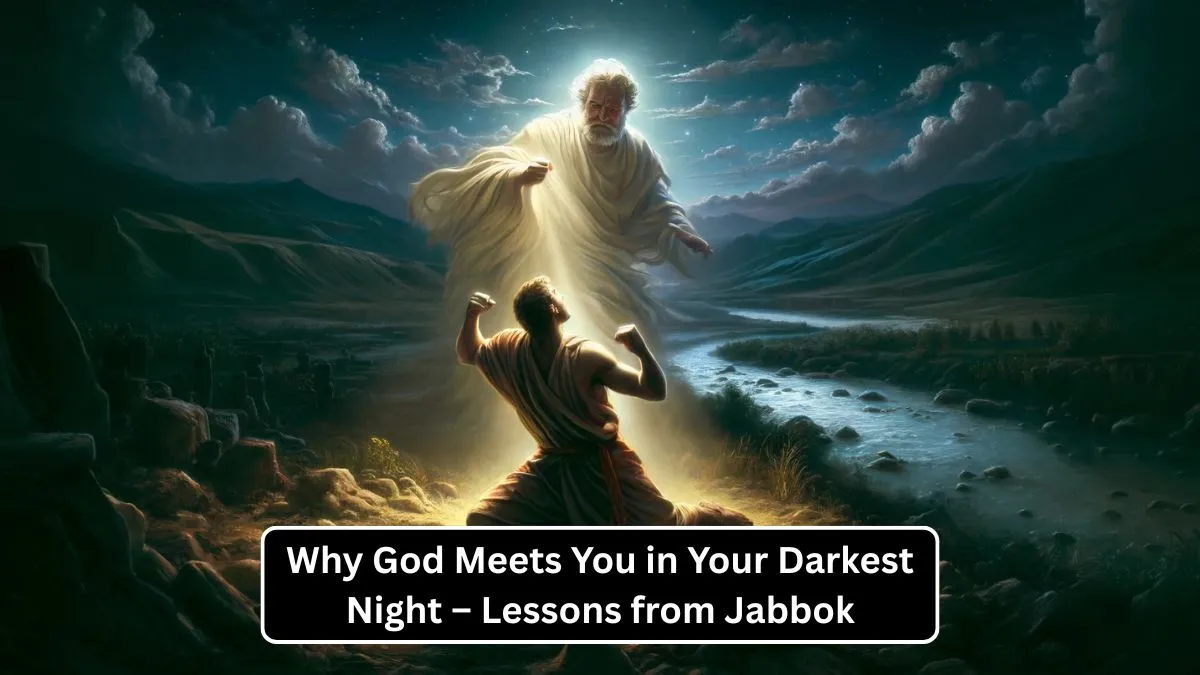
In life’s most difficult and uncertain moments, many people find themselves questioning purpose, direction, and even faith. It is often during these dark nights of the soul that transformation quietly begins, even when hope feels distant. The biblical story of Jacob wrestling at Jabbok offers a profound and deeply human picture of struggle, fear, and eventual breakthrough.
This encounter is not just an ancient narrative but a timeless reflection of how adversity shapes identity and spiritual growth. When everything seems lost, something greater is often being formed beneath the surface. Understanding why God meets individuals in their darkest seasons can bring clarity, comfort, and renewed strength.
This article explores meaningful lessons from Jacob’s experience at Jabbok, revealing how struggle can lead to blessing, identity, and purpose, even when the journey feels overwhelming and uncertain in every possible way.
The Night of Isolation and Inner Conflict
Jacob’s journey to Jabbok represents a moment of complete isolation where external distractions fade and internal struggles become unavoidable. In this deeply personal night, he is left alone with his fears, past mistakes, and uncertain future. Isolation is often uncomfortable, yet it is in these quiet spaces that individuals confront truths they have long avoided.
Jacob was preparing to face his brother Esau, whom he had wronged, and the anxiety surrounding this encounter intensified his inner turmoil. This moment reflects how life often brings individuals to a place where they must confront unresolved issues. Darkness, in this sense, is not merely suffering but an invitation to reflection and honesty.
When distractions are removed, clarity begins to emerge. God uses these seasons to strip away illusions and reveal deeper realities. The night of isolation becomes a sacred space where transformation begins, even when it feels overwhelming and deeply unsettling.
Wrestling with God: The Struggle That Transforms
The act of wrestling at Jabbok is symbolic of the intense spiritual and emotional battles individuals face when confronting life’s greatest challenges. Jacob’s struggle was not passive; it was active, persistent, and deeply personal. Wrestling represents resistance, questioning, and the refusal to let go without receiving clarity or blessing. This moment reveals that transformation often requires effort, endurance, and vulnerability.
Many people experience similar struggles when facing uncertainty, loss, or identity crises. Instead of avoiding these battles, embracing them can lead to profound growth. Jacob’s determination to continue wrestling until he received a blessing demonstrates faith in action, even amid confusion. God meets individuals not in perfection but in persistence.
The struggle itself becomes a tool for shaping character and deepening understanding. Through wrestling, Jacob moved from fear to faith, showing that transformation is not instant but forged through perseverance and unwavering engagement with life’s hardest moments.
The Power of Persistence in Dark Seasons
Persistence is a defining theme in Jacob’s encounter, illustrating how endurance plays a critical role in personal and spiritual breakthroughs. Despite exhaustion and injury, Jacob refused to release his hold until he received a blessing. This persistence highlights the importance of resilience during life’s darkest periods.
Many individuals give up when faced with prolonged hardship, yet it is often at the edge of surrender that transformation occurs. Persistence is not about blind stubbornness but about holding onto hope when circumstances seem impossible. It requires faith, courage, and a willingness to continue despite uncertainty.
Jacob’s story teaches that breakthroughs rarely come easily; they are earned through determination and trust. God honors persistence by meeting individuals in their struggle and guiding them toward growth. Dark seasons test endurance, but they also build strength. Through persistence, individuals discover their capacity to overcome, transforming pain into purpose and difficulty into lasting spiritual insight.
Identity Redefined Through Struggle
One of the most significant outcomes of Jacob’s encounter at Jabbok is the transformation of his identity. No longer defined by his past as a deceiver, he is given a new name, symbolizing a new purpose and direction. This moment illustrates how struggle often precedes identity transformation. Many individuals define themselves by past failures, mistakes, or external labels, limiting their potential for growth.
However, challenging experiences have the power to reshape self-perception and reveal deeper truths. Jacob’s new identity reflects a shift from manipulation to perseverance and faith. This transformation did not occur in comfort but through confrontation and struggle.
It shows that identity is not fixed but evolves through experience and growth. God meets individuals in their brokenness to redefine who they are and who they can become. Through struggle, old identities are shed, making way for a renewed sense of purpose, strength, and spiritual clarity.
The Blessing Hidden Within Pain
Pain is often perceived as something to avoid, yet Jacob’s story reveals that it can carry hidden blessings. After wrestling through the night, Jacob receives both a blessing and a physical injury, symbolizing that growth often comes with lasting reminders of the struggle. This paradox highlights how pain and blessing can coexist.
Many individuals experience hardship that ultimately leads to greater wisdom, resilience, and compassion. Pain has the ability to break down pride, foster humility, and open the heart to transformation. Instead of viewing suffering as meaningless, it can be understood as a process that shapes character and deepens faith.
Jacob’s limp serves as a reminder of his encounter, marking a moment of profound change. God does not waste pain but uses it as a tool for growth. Within every difficult experience lies the potential for blessing, even if it is not immediately visible or easily understood.
Facing Fear with Renewed Strength
Before his encounter at Jabbok, Jacob was consumed by fear about meeting Esau, uncertain of the outcome and burdened by past actions. However, after wrestling and receiving his blessing, he approached the situation with renewed courage and confidence. This shift illustrates how inner transformation directly impacts external circumstances.
Fear often stems from unresolved issues and uncertainty, but when individuals confront their struggles, they gain clarity and strength. Jacob’s encounter prepared him not by changing Esau, but by changing himself. This highlights an important truth: transformation begins within. When individuals face their fears with honesty and perseverance, they emerge stronger and more resilient.
God uses dark moments to equip individuals for future challenges, building courage and faith. Fear does not disappear instantly, but it loses its power when confronted. Through struggle, individuals develop the strength needed to face life’s uncertainties with confidence and trust in a greater purpose.
Surrender as a Path to Victory
At first glance, wrestling suggests resistance, yet Jacob’s story ultimately reveals the importance of surrender. True victory did not come from overpowering but from holding on and yielding to transformation. Surrender is often misunderstood as weakness, but it is a powerful act of trust and acceptance. It involves letting go of control and allowing change to occur.
Jacob’s willingness to remain engaged while accepting his limitations demonstrates the balance between effort and surrender. Many individuals resist change out of fear, clinging to familiar patterns even when they are harmful. However, surrender opens the door to growth and renewal. God meets individuals in their surrender, guiding them toward healing and transformation.
Victory is not always about winning in a conventional sense but about becoming stronger, wiser, and more aligned with purpose. Through surrender, individuals discover that letting go can lead to profound and lasting breakthroughs.
The Role of Faith in Uncertain Moments
Faith plays a central role in navigating dark seasons, providing hope and direction when circumstances are unclear. Jacob’s persistence in wrestling reflects an underlying belief that his struggle had meaning and that a blessing was possible. Faith does not eliminate uncertainty but offers the strength to endure it. Many individuals struggle with doubt during difficult times, questioning purpose and direction.
However, faith involves trusting even when answers are not immediately available. It requires patience, resilience, and a willingness to continue moving forward. Jacob’s story demonstrates that faith is not passive but active, requiring engagement and perseverance. God meets individuals where their faith is tested, using those moments to deepen understanding and trust.
Through faith, individuals find the courage to face challenges and embrace transformation. Uncertainty becomes less intimidating when viewed through the lens of faith, allowing individuals to move forward with confidence and hope.
Transformation Leaves a Lasting Mark
One of the most powerful aspects of Jacob’s encounter is the lasting impact it had on his life. The physical mark he carried served as a constant reminder of his transformation and encounter. This illustrates how meaningful experiences leave lasting impressions that shape identity and perspective. Transformation is not temporary; it influences how individuals think, act, and relate to others.
Many people carry invisible marks from their struggles, shaping their character and resilience. These marks are not signs of weakness but evidence of growth and endurance. Jacob’s story shows that true change is both internal and external, affecting every aspect of life.
God uses transformative moments to create lasting impact, ensuring that lessons learned are not forgotten. Through these experiences, individuals develop a deeper understanding of themselves and their purpose. Transformation is a journey, and its effects continue to influence life long after the initial struggle has passed.
Why God Meets You in the Darkest Night
Darkness often feels like abandonment, yet Jacob’s story reveals that it can be a place of divine encounter. God meets individuals not only in moments of joy but also in times of struggle and uncertainty. The darkest nights provide opportunities for growth, reflection, and transformation that might not occur in comfort.
These moments strip away distractions, allowing individuals to focus on what truly matters. Jacob’s encounter shows that darkness is not the end but a beginning, a space where new identity and purpose are formed. God uses these seasons to prepare individuals for what lies ahead, shaping their character and faith. While difficult, these experiences are often necessary for growth.
Darkness becomes meaningful when understood as part of a larger journey. Through struggle, individuals discover strength, resilience, and purpose, realizing that even in the darkest moments, they are not alone but being guided toward transformation.
Last Thought
Life’s darkest moments often feel isolating and overwhelming, yet they hold the potential for profound transformation. Jacob’s encounter at Jabbok reminds us that struggle is not meaningless but a pathway to growth, identity, and purpose. When faced with hardship, choosing persistence, faith, and surrender can lead to unexpected breakthroughs.
These experiences shape character and reveal inner strength that might otherwise remain hidden. Even when clarity is absent, transformation is quietly unfolding. Trusting the process allows individuals to emerge stronger and more aligned with their purpose, carrying forward the lessons learned through every challenge they have faced.
FAQs
Q1: Why did Jacob wrestle at Jabbok?
Jacob wrestled as a symbolic struggle with his fears, past, and desire for transformation and blessing.
Q2: What does Jabbok represent spiritually?
It represents a place of confrontation, transformation, and encountering God during difficult times.
Q3: Why does God allow dark seasons?
Dark seasons help individuals grow, reflect, and develop strength, faith, and deeper understanding.
Q4: What is the main lesson from Jacob’s story?
The main lesson is that struggle can lead to transformation, blessing, and a renewed identity.